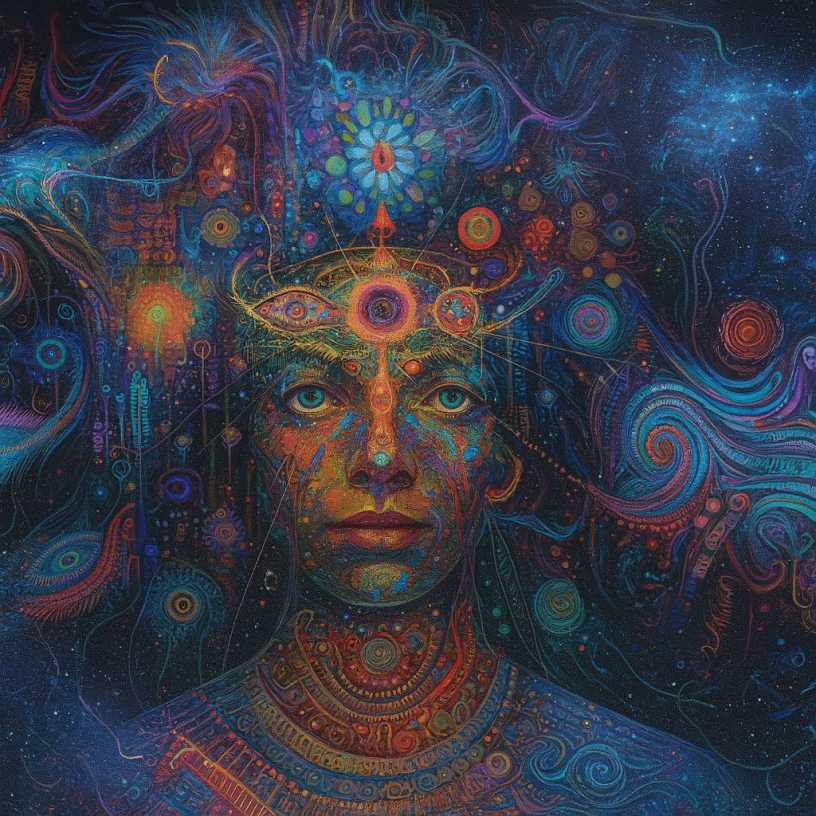
The just published Bloomsbury Handbook of Religious Ecstasy includes my chapter on “Distributive Effervescence and Late Modern Shamanisms: Ecstatic Emotional Energy in Secularizing Societies.”
The first couple of paragraphs provide an abstract:
“This chapter briefly explores a broad set of contemporary ecstatic experiences and practices, referred to as ‘late modern shamanisms,’ in light of a new theory about the macro-level conditions and micro-level mechanisms that shape social cohesion in secularizing societies, referred to as ‘distributive effervescence’ (following McCaffree & Shults 2022). As explained in more detail below, the latter theory posits the existence of a continuum of modes of social cohesion, which are influenced by a suite of historically contingent variables that impact the volume, scope, and rate of human interactions. Whereas in traditional, homogeneous small-scale societies social cohesion was fostered by emotional energy that emerged through ritual experiences that produced ‘collective’ effervescence (in Durkheim’s sense), in some contemporary, secularizing large-scale societies emotional energy can be generated via punctuated interactions with heterogeneous others across diverse settings. This produces a ‘distributive’ effervescence that also enhances social cohesion, albeit in a different form and at different levels of intensity.
My thesis here is that many contemporary, non-indigenous forms of ‘shamanism’ are an expression of distributive effervescence within late modern societies insofar as they provide opportunities for participatory interactions that produce cohesion-enhancing, ecstatic emotional energy. The overall argument is abductive: we can make better sense of the flourishing phenomena of late modern shamanisms if we interpret them as natural manifestations of an adaptive, emergent mode of social cohesion that is typical within the evolutionarily novel setting of contemporary, pluralistic, secularizing societies with adequate levels of existential security. The first step is clarifying what exactly is meant by ‘late modern shamanisms’ (the explanandum) and ‘distributive effervescence’ (the explanans), after which I will be able to make the argument that the latter helps to explain the popularity and relatively rapid expansion of the former in contexts where such experiences and practices might not be expected to emerge and spread. I conclude by summarizing the argument, highlighting its relevance, and exploring its implications for future research.”
 F. LeRon Shults